-
How to Clean Kitchen Appliances, Step by Step
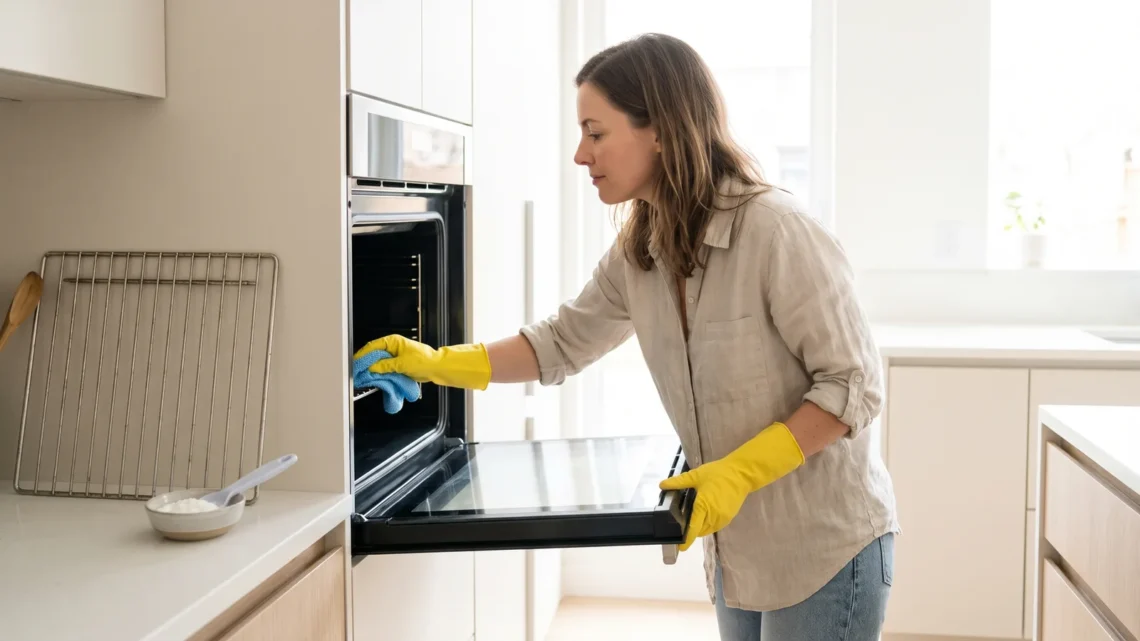
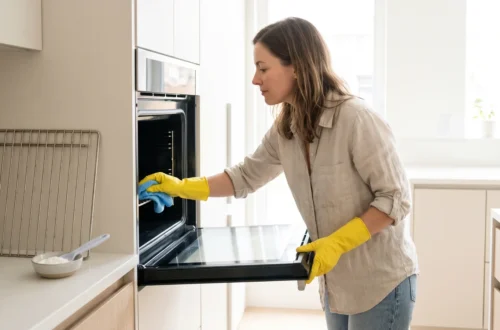
The safe route for how to clean kitchen appliances is appliance-specific: heat or steam for the oven, steam plus mild detergent for the microwave, soapy water for the fridge, and a filter wash plus cleaner cycle for the dishwasher. The oven rack is out on the counter and the cavity is empty before any wiping starts — gloves on, door fully open. AI-generated illustration Contents Quick steps for a safe appliance deep clean What to decide first: method, settings and limits for each appliance Step 1 — Deep clean the oven: self-clean, steam clean or baking-soda paste Step 2 — Deep clean the microwave with steam, then the door, edge…
-
How to Cook Corned Beef Brisket Until Fork-Tender
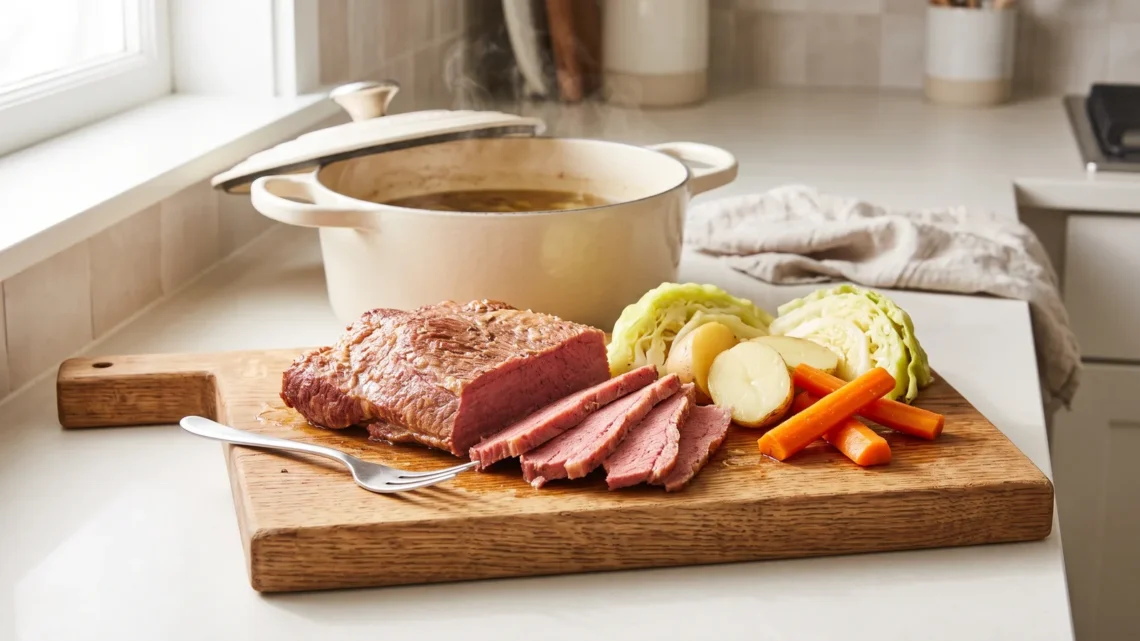
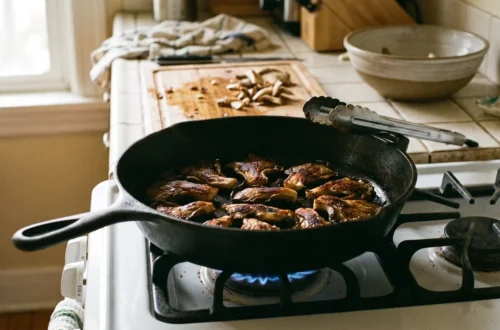
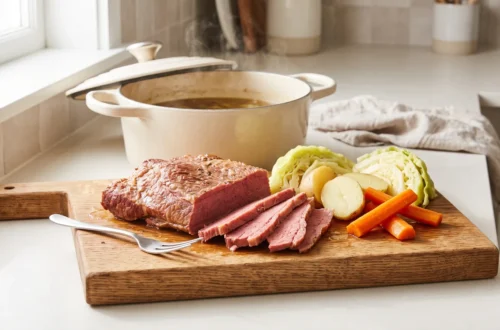
Here’s how to cook corned beef brisket: cover it with water and cook it gently — a bare stovetop simmer, a covered oven, or a slow cooker — until a thermometer clears the USDA FSIS minimum and a fork slides in. Sliced brisket on the board with halved potatoes, thick carrot batons and cabbage wedges — the finish described in Step 4. AI-generated illustration Contents Quick steps: corned beef brisket on the stove, in the oven or a slow cooker What to decide first: cut, method and timing Step 1 — Prep the brisket: rinse, trim, spice packet and the right pot Step 2 — Cook it low and slow:…
-
How to Cook Flat Iron Steak So It Stays Tender
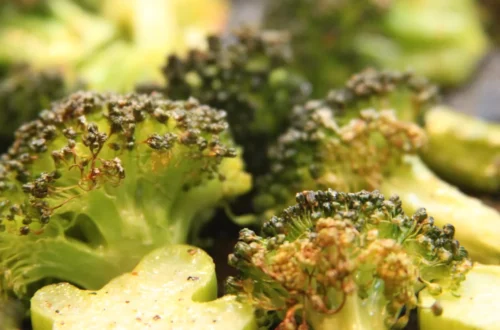
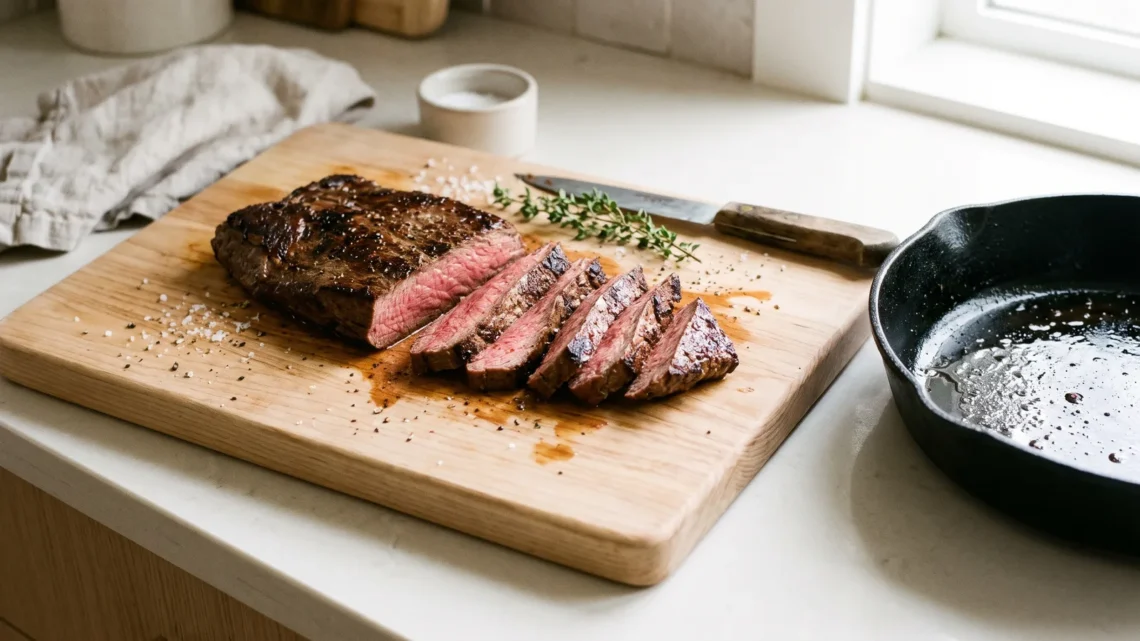
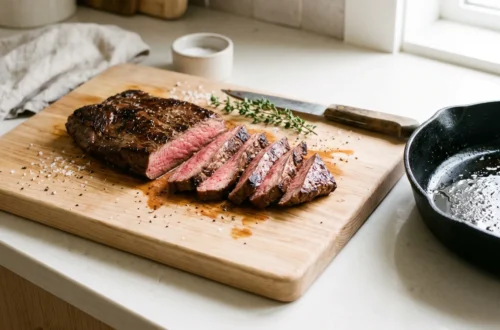
How to cook flat iron steak that stays tender: dry-brine it, sear it hot and fast over high heat, pull it at 140°F for medium rare (a beef checkoff pull temp; USDA’s minimum is 145°F — see the temperature section), rest 5 minutes, then slice thin across the grain. Look at the cut face of each slice: even pink through the center, dark seared crust at the edge, rested on the board before serving. AI-generated illustration Contents Quick steps for tender flat iron steak What to decide first: thickness, doneness and method Step 1 — Prep the steak: trim the center seam, then dry-brine Step 2 — Preheat properly: skillet,…
-
How to Write a Recipe Others Can Actually Cook
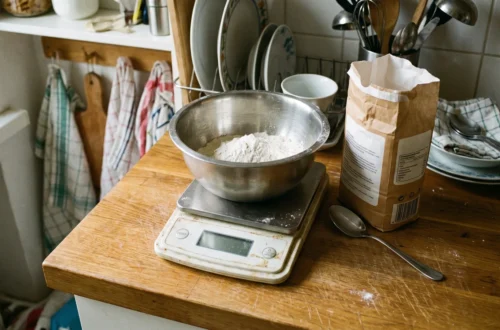
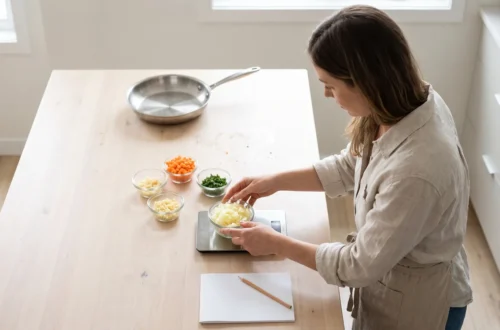
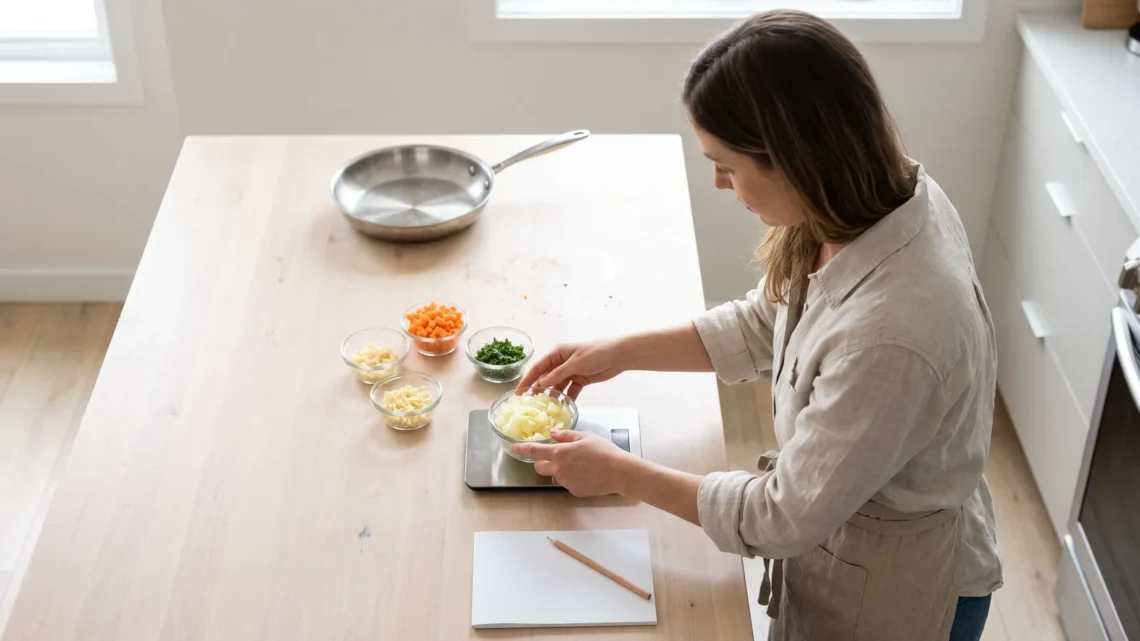
To learn how to write a recipe others can follow, cook it once while logging weights, times and pan sizes, then write a header block, ingredients in use order, and numbered single-action steps with doneness cues. Weighing a bowl of prepped onion on the kitchen scale, with trimmed carrot and herbs already portioned — the trimmed weight is what gets logged. AI-generated illustration Contents Quick steps: a recipe someone else can cook What to decide first: format, units, yield, temperature and video length Step 1 — Cook the dish and log weights, times, pan sizes and doneness cues Step 2 — Write the header block and the ingredient list in…
-
What Makes a Recipe Video Easy to Follow
A recipe video is easy to follow when every shot answers the cook’s next question — wide for setup, overhead for action, macro for state changes — and captions, on-screen text and chapters are built to platform spec. The boom-mounted camera aims down at the pan while the small prep bowls wait at the right — that row is where ingredient states get shown. AI-generated illustration Contents Fact Level First: Confirmed, Reported and Not Disclosed Background: How the Overhead, Hands-Only Video Became Default The Problem: Where a Recipe Video Loses the Cook Solution Part 1: A Shot List That Answers the Cook’s Next Question Solution Part 2: Captions, On-Screen Text…
-
What Is Mise en Place? A Home Cook’s Guide
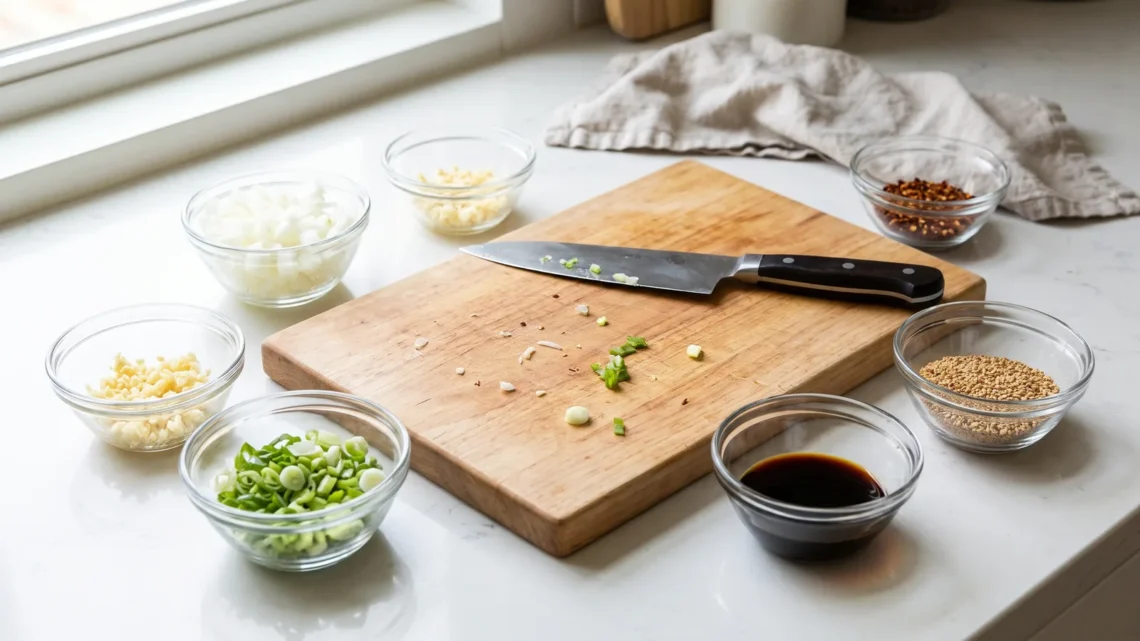
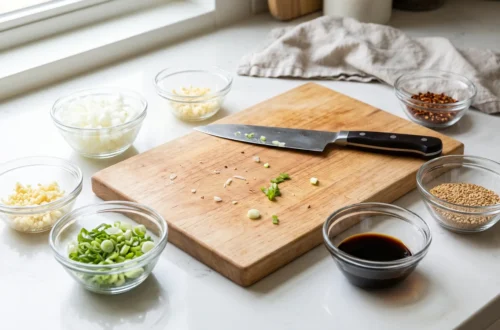
What is mise en place? It’s the kitchen habit of reading a recipe all the way through, then measuring, cutting and staging every ingredient and tool before you turn on a burner. Each ingredient chopped and portioned into its own glass bowl around the board and knife — the staged setup the definition describes. AI-generated illustration Contents What Is Mise en Place? The One-Sentence Definition Where the Term Came From (and Why Restaurant Kitchens Live By It) How Mise en Place Works: Read, Prep, Arrange 1. Read 2. Prep 3. Arrange Mise en Place vs. Meal Prep: What’s Actually Different How Home Cooks Use Mise en Place on a Weeknight…
-
How to Remove Grease From Kitchen Cabinets Safely
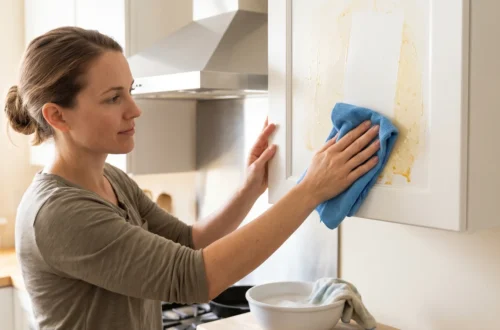
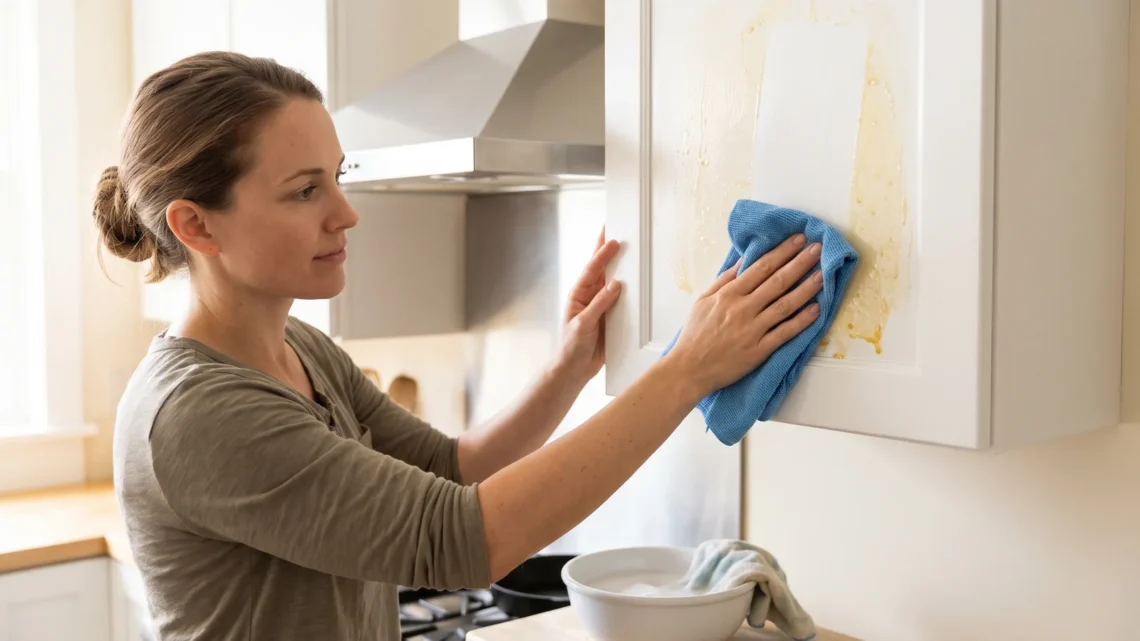
Here’s how to remove grease from kitchen cabinets without wrecking the finish: dust dry, then wipe with warm water and a few drops of mild dish soap, soften sticky spots with a damp cloth, rinse, and dry immediately. Wiping a cabinet door with a damp microfiber cloth — note the pale streak where the tacky amber film lifts off the finish. AI-generated illustration Contents Quick steps Why cabinet grease turns sticky — and what actually ruins the finish Your gentle-first grease kit: the checklist before you start Step 1 — Identify your cabinet finish and spot-test in a hidden place Step 2 — Dry-dust the doors, frames and handles first…
-
How to Choose a Set of Kitchen Utensils in 2026
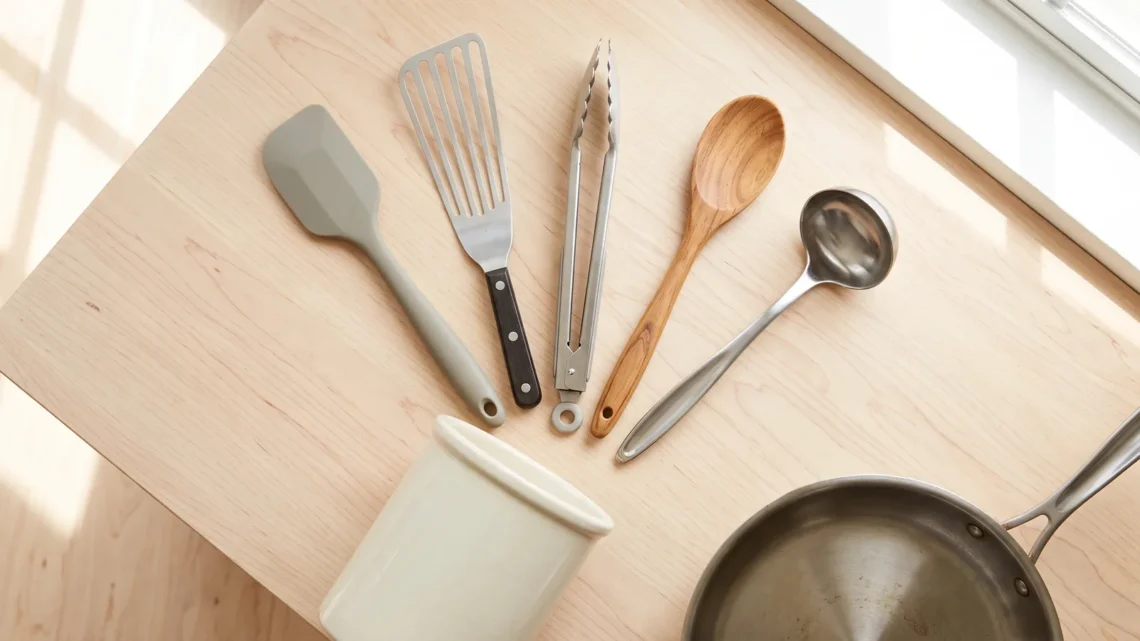
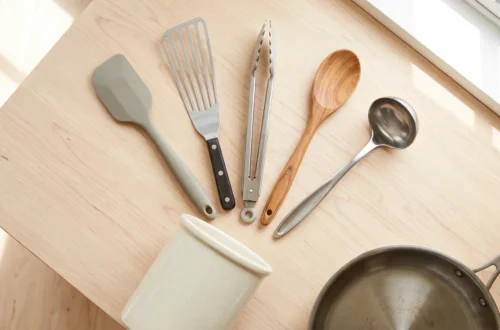
The short answer to how to choose a set of kitchen utensils: buy five workhorses — a silicone spatula, a thin slotted turner, locking tongs, a spoon and a ladle — and skip the single-job gadgets. Laid out left to right: spatula, slotted turner, tongs, wooden spoon and ladle — plus the crock, the storage footprint to plan for. AI-generated illustration Contents How we compared What this comparison checked, and what it could not 1. OXO Good Grips 10 Piece Everyday Kitchen Tool Set 2. OXO Good Grips 4-Piece Nylon Tool Set 3. GIR Skinny Silicone Spatula, the one-tool upgrade 4. U-Taste 600°F Silicone Cooking Tools Set 5. OXO Good…
-
Meal Prep Ideas for the Week That Last to Friday
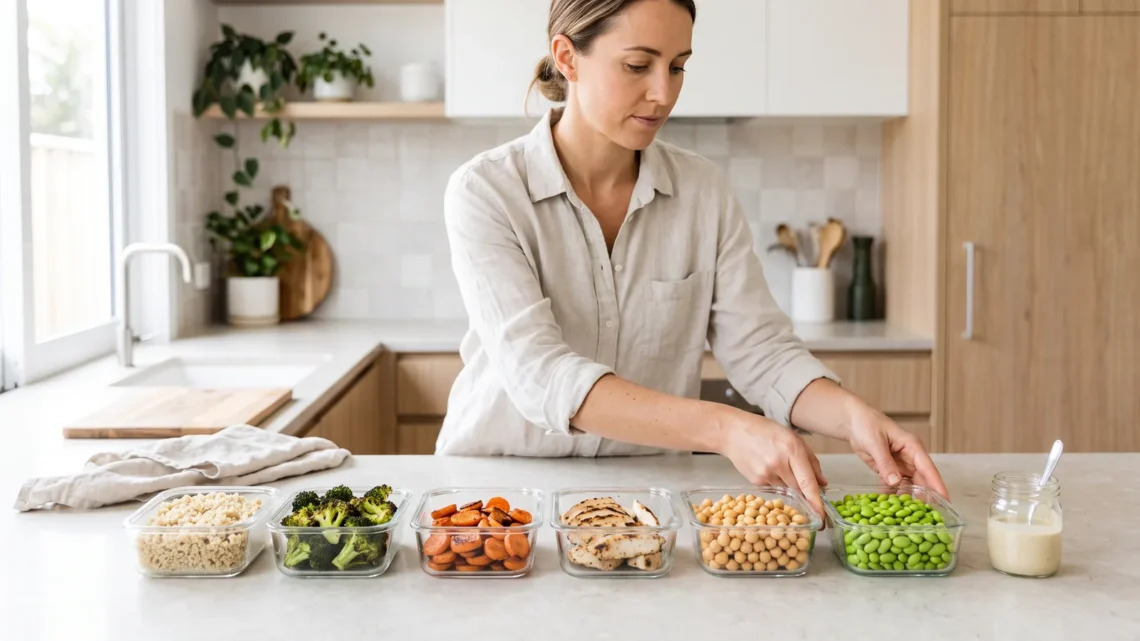
The meal prep ideas for the week that survive to Friday are component-based: cook four building blocks, chill them fast in shallow containers, label the cook date, and freeze the last two days’ portions on Sunday night. Components stay separate along the counter — grain, roasted vegetables, chicken, beans — with the sauce in its own jar at the right. AI-generated illustration Contents Quick steps for a week that holds The Friday problem: why a Sunday cook-off tastes tired by Wednesday The clock you’re actually prepping against: the 3-to-4-day fridge limit, the 2-hour rule, and 40°F Example: Priya’s week, Sunday dinner through Friday lunch Before and after: the cook-five-finished-meals marathon…
-
How to Upgrade Your Kitchen Appliances, Ranked
The short answer on how to upgrade your kitchen appliances: start with an induction cooktop, an ENERGY STAR dishwasher and refrigerator, then a one-second instant-read thermometer, a countertop convection oven, and a hood that vents outside. Contents How we compared 1. Induction cooktop or range 2. ENERGY STAR certified dishwasher 3. ENERGY STAR certified refrigerator 4. ThermoWorks Thermapen ONE instant-read thermometer 5. Countertop convection and air-fry oven 6. Vented range hood Which one fits you Key facts ENERGY STAR certified electric cooking products are 18% more efficient on average than standard electric models. (Electric Cooking Products | ENERGY STAR) Induction transfers about 85% of heating energy into the cookware, versus…